Posts

How one bacterium inhibits predators with poison:
Image
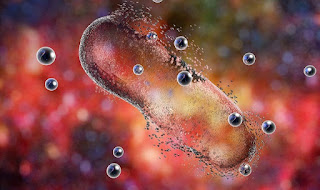
How one bacterium inhibits predators with poison: Microbiologists in South Korea report that the bacterium Chromobacterium piscinae produce cyanide when under attack from Bdellovibrio bacteriovorus HD100, a microbial predator found in streams and soils that ingests its prey from the top to bottom. Scientists found that the prey delivered levels of cyanide sufficiently high to hinder, but not kill, the B. bacteriovorus HD100. Examinations demonstrated that C. piscinae secrete the defensive cyanide in a nutrient-rich broth. In a medium without supplements, it didn't secrete the cyanide and was consumed. The scientists suspect that the microorganisms likely uses some ingredients in the broth to secrete the cyanide. That perception suggests that microscopic organisms' defenses may depend on location-- and, more generally, that microorganism may harbor defensive components that are activated in a suitable environment, but not in others. To test whether cyanide alone was d...

Neisseria gonorrhoeae: Combating a Multidrug-Resistant Organism

Image
Neisseria gonorrhoeae: Combating a Multidrug-Resistant Organism: The worldwide spread of anti-toxin resistant sexually transmitted diseases (STD) has received increased consideration in the course of recent years from health institutes including the World Health Organization (WHO) and the Centers for Disease Control and Prevention (CDC). In this post we will give a background marked by multidrug-safe Neisseria gonorrhoeae taken after by a depiction of the test techniques clinical labs are utilizing to decide the antimicrobial susceptibilities of N. gonorrhoeae isolates. About Gonorrhea Gonorrhea is a worldwide widespread disease caused by N. gonorrhoeae, a Gram-negative bacterium. As per CDC, roughly 470,000 new gonorrheal diseases were accounted for. Notwithstanding, on the grounds that numerous cases are asymptomatic, and consequently unreported, it is evaluated that there are roughly 820,000 new cases every year. Furthermore, it is assessed that 246,000 of these cases conv...

Digesting the Indigestible

Image
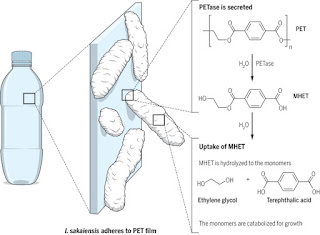
    Move over Silicon Valley, the next big thing is microscopic! Microbes are taking over the biotech industry, contributing their unique characteristics toward a diverse array of applications, technologies and new startup ventures. From influencing personalized medicine, improving agriculture and degrading previously undegradable plastics to bioproduction of fuels and 3D printing materials, microbes have infiltrated a slew of industries. No doubt about it, microbiology is the technology buzzword of 2018. As global plastic waste increases, science turns to specialized microbes to degrade previously non-degradable plastics. A bacterial species found growing in a plastic recycling plant, Ideonella sakaiensis 201-F6, exhibits an incredible and rarely seen ability to use the common plastic, PET, as its major energy source. While there are 7 official codes to distinguish between plastics, set by the Society of Plastic Industries, there really are only 2 types that regul...

A new and promising class of chemical compounds has major potential for treating Zika virus and respiratory syncytial virus, or RSV, according to a new study by University of Alberta scientists. The next step is to develop a drug.

Image
A new and promising class of chemical compounds has major potential for treating Zika virus and respiratory syncytial virus, or RSV, according to a new study by University of Alberta scientists. The next step is to develop a drug... Another and promising class of synthetic mixes has the noteworthy potential for treating Zika disease and respiratory syncytial infection, or RSV, according to another examination by University of Alberta scientists. The accompanying stage is to develop a medication. "This is both a wonderful scientific discovery and something that can possibly emphatically influence worldwide wellbeing as well as the economy of Canada," said Fred West, professor in the Department of Chemistry who led the new discovery along with David Marchant. The compound is alike isatisine A which is an antiviral compound usually found in traditional Chinese herbal medicine. Hobman is a professor of cell biology and a specialist in the Zika virus, a pathogen that can...

How bacteria grow in Anaerobic environment?

Bacteria that grow in Oxygen deficit condition: Scientists have uncovered a mechanism by which bacterial cells in crowded, anaerobic environment access oxygen for energy generation which ensures survival of the cell. The finding could clarify how a few microscopic organisms, for example, Pseudomonas aeruginosa, can flourish in oxygen-poor conditions like biofilms and resist antibiotics. P. aeruginosa biofilm diseases are a main source of death for individuals suffering from cystic fibrosis, a hereditary condition that affects the lungs and the digestive system. Microscopic organisms rarely live by themselves as single-celled organisms. Most rather develop in networks, utilizing the strength of numbers to form a biofilm with tissue-like properties similar to a scaffold that serves to strengthen the community , making it up to 1,000 times more resistant to most antibiotics. Every individual cell should without anyone else extract electrons from food that are then transp...

Can bacteria survive in space?

Image
Can bacteria survive in space? Earth microbes could be contaminating different planets. Notwithstanding extraordinary purification endeavors, microorganisms from Earth still figures out how to discover its way into space on board shuttle. Scientists are working to better understand  how and why a few spores elude decontamination. The research was based on spore-forming microscopic organisms, which can survive harsh environments   on earth. These microscopic organisms could hitch a ride on shuttles and contaminate other planets, making the chase for alien   life forms difficult. Microscopic organisms taken from the scrumptiously named fishing village of Beer on Britain's south coast have demonstrated themselves some of the hardiest creatures on Earth - or in space so far as that is concerned. Microorganisms found in rocks taken from the cliffs at Beer have survived an exhausting 18 months introduction to space conditions on the outside of the ISS and return...

Microbiology of the rapidly changing polar environments

Image
Microbiology of the rapidly changing polar environments Marine and freshwater polar environments are characterized by intense physical forces and strong seasonal variations. The persistent cold and sometimes inhospitable conditions create unique ecosystems and habitats for microbial life. Polar microbial communities are diverse productive assemblages, which drive biogeochemical cycles and support higher food-webs across the Arctic and over much of the Antarctic. Recent studies on the biogeography of microbial species have revealed phylogenetically diverse polar ecotypes, suggesting adaptation to seasonal darkness, sea-ice coverage and high summer irradiance. Because of the diversity of habitats related to oceanic circulation and the formation and melting of sea ice, high latitude oceans are ideal environments to investigate composition and functionality of marine microbes. In addition, polar regions are responding more dramatically to climate change compared to temperate environ...